Ergon Update February 2012
Finding ways to measure the impact of trade deals on employment
The European Commission has published a major Ergon research report that explores how best to assess and monitor the impacts of trade on employment, with a special focus on the involvement of social partners.
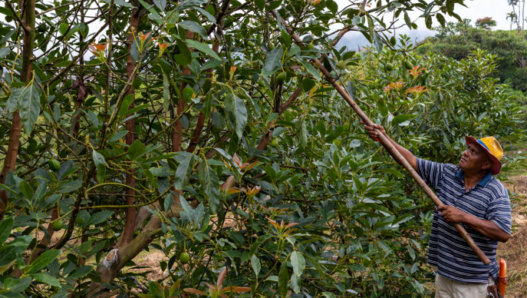
In particular, the report sets out the results of a pilot monitoring exercise in Chile, which sought to identify the employment impacts of the 2003 EU-Chile trade agreement. In partnership with the University of Chile, we developed and applied a methodology that involved both quantitative data analysis and engagement with social partners in four sectors. The study found tentative evidence of a positive correlation between increased trade with Europe and improved performance on certain employment indicators. We also found evidence that ethical trade and certification schemes were having a positive impact, particularly in the Chilean fruit and wine sectors.
In addition, the research made recommendations for improving the quality of engagement with social partners during the Sustainability Impact Assessments (SIAs) conducted as part of 13 bilateral trade negotiations.
The research was led by Kirsten Newitt and Steve Gibbons. Read the Executive Summary here.
Human rights and extractives
Ergon’s work for the extractives sector is growing. We have recently completed a labour impact assessment for a large prospective mine in West Africa, and we are working currently on a human rights impact assessment for a major gas pipeline in South Eastern Europe, and on issues around Chinese contract workers in Africa and Central America. We have also worked on training materials on human rights within the oil and gas industry.
Ergon’s work on extractives is led by Steve Gibbons, supported by Brett Dodge.
UN Principles on Business and Human Rights becoming embedded
The UN Guiding Principles on Business and Human Rights looks set to be adopted quickly by a range of sectors. Within the financial sector, we have previously noted that the new IFC Performance Standards, effective from I January 2012, contain elements aligned with the Principles and the Protect, Respect and Remedy Framework that lies at the heart of them. The Equator Principles, are also being updated to take this into account. For our part, Ergon has been approached by a number industry bodies, multi-stakeholder initiatives, individual companies and trade unions within the extractives and retail sectors to update their internal processes and policy documents to take account of the principles that underpin the UN Framework.
Wage ladders: tea and bananas
Following from our work on understanding wages in the tea industry, Ergon has conducted further wage-related work. We have completed wage ladders for eight banana-producing countries for the World Banana Forum. That work has been commissioned by the Forum’s working group on distribution of value. Additionally, for a UK-based multiple retailer we have produced general guidance and communications materials for workplace managers at suppliers on understanding living wage issues. Alastair Usher, Natalie Perret and Pins Brown are leading on this workstream.
GSCP Equivalence Process
Stuart Bell has been appointed as an expert Panel member for the Equivalence Process of the Global Social Compliance Programme (GSCP). The Process provides a way for buying companies, social auditors or suppliers to benchmark their social compliance policies and procedures against GSCP’s reference tools.
Supply chain guidance work
Ergon has been working with a number of organisations over the last few months on varied projects related to supply chain and labour issues, including guidance on promotion of freedom of association and worker dialogue; development of principles on worker accommodation; guidance on working hours; and enhancement of an ethical trading function and team.